

1·
17 days agodeleted by creator
deleted by creator
This is just another layer. Order in 8/2(2+2) is still not clear if you understand the division symbol correctly.
https://en.wikipedia.org/wiki/Order_of_operations#Mixed_division_and_multiplication
Both are right, depending on who you ask:
most people see:
8 / 2 * (2+2) = 16
math people see “juxtaposition” instead of multiplication, it has precedence over multiplication and division:
5 / 2a = 5 / (2 * a)
Math notation just sucks and is not standard in general, everyone just tries to avoid ambiguity like in this equation.

https://doc.rust-lang.org/nomicon/races.html
Safe Rust guarantees an absence of data races
I know that it was unsafe block in this CVE, but the irony of the situation is funny.
type
  AOCSolution[T,U] = tuple[part1: T, part2: U]
  Vec3 = tuple[x,y,z: int]
  Node = ref object
    pos: Vec3
    cid: int

proc dist(a,b: Vec3): float =
  sqrt(float((a.x-b.x)^2 + (a.y-b.y)^2 + (a.z-b.z)^2))

proc solve(input: string, p1_limit: int): AOCSolution[int, int] =
  let boxes = input.splitLines().mapIt:
    let parts = it.split(',')
    let pos = Vec3 (parseInt parts[0], parseInt parts[1], parseInt parts[2])
    Node(pos: pos, cid: -1)

  var dists: seq[(float, (Node, Node))]
  for i in 0 .. boxes.high - 1:
    for j in i+1 .. boxes.high:
      dists.add (dist(boxes[i].pos, boxes[j].pos), (boxes[i], boxes[j]))

  var curcuits: Table[int, HashSet[Node]]
  var curcuitID = 0

  dists.sort(cmp = proc(a,b: (float, (Node, Node))): int = cmp(a[0], b[0]))

  for ind, (d, nodes) in dists:
    var (a, b) = nodes
    let (acid, bcid) = (a.cid, b.cid)

    if acid == -1 and bcid == -1: # new curcuit
      a.cid = curcuitID
      b.cid = curcuitID
      curcuits[curcuitId] = [a, b].toHashSet
      inc curcuitID
    elif bcid == -1: # add to a
      b.cid = acid
      curcuits[acid].incl b
    elif acid == -1: # add to b
      a.cid = bcid
      curcuits[bcid].incl a
    elif acid != bcid: # merge two curcuits
      for node in curcuits[bcid]:
        node.cid = acid
      curcuits[acid].incl curcuits[bcid]
      curcuits.del bcid

    if ind+1 == p1_limit:
      result.part1 = curcuits.values.toseq.map(len).sorted()[^3..^1].prod

    if not(acid == bcid and acid != -1): result.part2 = a.pos.x * b.pos.x
Runtime: 364 ms
Part 1:
I compute all pairs of Euclidean distances between 3D points, sort them, then connect points into circuits, using, what I think is called a Union‑Find algorithm (circuits grow or merge). After exactly 1000 connections (including redundant ones), I take the three largest circuits and multiply their sizes.
Part 2:
While iterating through the sorted connections, I also calculate the product of each pair x‑coordinates. The last product is a result for part 2.
Problems I encountered while doing this puzzle:
ref objects stored in a HashTable (~ 40 min)Time to solve Part 1: 1 hour 56 minutes
Time to solve Part 2: 4 minutes
Full solution at Codeberg: solution.nim
Another simple one.
Part 1: count each time a beam crosses a splitter.
Part 2: keep count of how many particles are in each column in all universes
(e.g. with a simple 1d array), then sum.
Runtime: 116 μs 95 µs 86 µs
type
  AOCSolution[T,U] = tuple[part1: T, part2: U]

proc solve(input: string): AOCSolution[int, int] =
  var beams = newSeq[int](input.find '\n')
  beams[input.find 'S'] = 1

  for line in input.splitLines():
    var newBeams = newSeq[int](beams.len)
    for pos, cnt in beams:
      if cnt == 0: continue
      if line[pos] == '^':
        newBeams[pos-1] += cnt
        newBeams[pos+1] += cnt
        inc result.part1
      else:
        newbeams[pos] += cnt
    beams = newBeams
  result.part2 = beams.sum()
Update: found even smaller and faster version that only needs a single array.
Update #2: small optimization
type
  AOCSolution[T,U] = tuple[part1: T, part2: U]

proc solve(input: string): AOCSolution[int, int] =
  var beams = newSeq[int](input.find '\n')
  beams[input.find 'S'] = 1

  for line in input.splitLines():
    for pos, c in line:
      if c == '^' and beams[pos] > 0:
        inc result.part1
        beams[pos-1] += beams[pos]
        beams[pos+1] += beams[pos]
        beams[pos] = 0
  result.part2 = beams.sum()
Full solution at Codeberg: solution.nim
The hardest part was reading the part 2 description. I literally looked at it for minutes trying to understand where the problem numbers come from and how they’re related to the example input. But then it clicked.
The next roadblock was that my template was stripping whitespace at the end of the last line, making parsing a lot harder. I’ve replaced strip() with strip(chars={'\n'}) to keep the trailing space intact.
Runtime: 1.4 ms 618 μs
type
  AOCSolution[T,U] = tuple[part1: T, part2: U]

proc solve(input: string): AOCSolution[int, int] =
  let lines = input.splitLines()
  let numbers = lines[0..^2]
  let ops = lines[^1]

  block p1:
    let numbers = numbers.mapIt(it.splitWhiteSpace().mapIt(parseInt it))
    let ops = ops.splitWhitespace()
    for x in 0 .. numbers[0].high:
      var res = numbers[0][x]
      for y in 1 .. numbers.high:
        case ops[x]
        of "*": res *= numbers[y][x]
        of "+": res += numbers[y][x]
      result.part1 += res

  block p2:
    var problems: seq[(char, Slice[int])]
    var ind = 0
    while ind < ops.len:
      let len = ops.skipWhile({' '}, ind+1)
      problems.add (ops[ind], ind .. ind + len - (if ind+len < ops.high: 1 else: 0))
      ind += len + 1

    for (op, cols) in problems:
      var res = 0
      for x in cols:
        var num = ""
        for y in 0 .. numbers.high:
          num &= numbers[y][x]

        if res == 0:
          res = parseInt num.strip
        else:
          case op
          of '*': res *= parseInt num.strip
          of '+': res += parseInt num.strip
          else: discard

      result.part2 += res
Full solution at Codeberg: solution.nim
+1 shitty superpower ideas
I should really start writing them down at this point.
Huh, I didn’t expect two easy days in a row.
Part 1 is a range check. Part 2 is a range merge.
Runtime: ~720 µs
type
  AOCSolution[T,U] = tuple[part1: T, part2: U]

proc merge[T](ranges: var seq[Slice[T]]) =
  ranges.sort(cmp = proc(r1, r2: Slice[T]): int = cmp(r1.a, r2.a))
  var merged = @[ranges[0]]
  for range in ranges.toOpenArray(1, ranges.high):
    if range.a <= merged[^1].b:
      if range.b > merged[^1].b:
        merged[^1].b = range.b
    else:
      merged.add range
  ranges = merged

proc solve(input: string): AOCSolution[int, int] =
  let chunks = input.split("\n\n")
  var freshRanges = chunks[0].splitLines().mapIt:
    let t = it.split('-'); t[0].parseInt .. t[1].parseInt

  freshRanges.merge()

  block p1:
    let availableFood = chunks[1].splitLines().mapIt(parseInt it)
    for food in availableFood:
      for range in freshRanges:
        if food in range:
          inc result.part1
          break

  block p2:
    for range in freshRanges:
      result.part2 += range.b-range.a+1
Full solution at Codeberg: solution.nim
type
  AOCSolution[T,U] = tuple[part1: T, part2: U]
  Vec2 = tuple[x,y: int]

proc removePaper(rolls: var seq[string]): int =
  var toRemove: seq[Vec2]
  for y, line in rolls:
    for x, c in line:
      if c != '@': continue
      var adjacent = 0
      for (dx, dy) in [(-1,-1),(0,-1),(1,-1),
                       (-1, 0),       (1, 0),
                       (-1, 1),(0, 1),(1, 1)]:
        let pos: Vec2 = (x+dx, y+dy)
        if pos.x < 0 or pos.x >= rolls[0].len or
           pos.y < 0 or pos.y >= rolls.len: continue
        if rolls[pos.y][pos.x] == '@': inc adjacent

      if adjacent < 4:
        inc result
        toRemove.add (x, y)

  for (x, y) in toRemove: rolls[y][x] = '.'

proc solve(input: string): AOCSolution[int, int] =
  var rolls = input.splitLines()
  result.part1 = rolls.removePaper()
  result.part2 = result.part1
  while (let cnt = rolls.removePaper(); result.part2 += cnt; cnt) > 0:
    discard
Today was so easy, that I decided to solve it twice, just for fun. First is a 2D traversal (see above). And then I did a node graph solution in a few minutes (in repo below). Both run in ~27 ms.
It’s a bit concerning, because a simple puzzle can only mean that tomorrow will be a nightmare. Good Luck everyone, we will need it.
Full solution is at Codeberg: solution.nim
type
  AOCSolution[T,U] = tuple[part1: T, part2: U]

proc maxJoltage(bank: string, n: int): int =
  var index = 0
  for leftover in countDown(n-1, 0):
    var best = bank[index]
    for batteryInd in index+1 .. bank.high-leftover:
      let batt = bank[batteryInd]
      if batt > best: (best = batt; index = batteryInd)
      if best == '9': break # max for single battery
    result += (best.ord - '0'.ord) * 10^leftover
    inc index

proc solve(input: string): AOCSolution[int, int] =
  for line in input.splitLines:
    result.part1 += line.maxJoltage 2
    result.part2 += line.maxJoltage 12
Runtime: ~240 μs
Day 3 was very straightforward, although I did wrestle a bit with the indexing.
Honestly, I expected part 2 to require dynamic programming, but it turned out I only needed to tweak a few numbers in my part 1 code.
Full solution at Codeberg: solution.nim
Easy one today. Part 2 is pretty forgiving on performance, so regex bruteforce was only a couple seconds . But eventually I’ve cleaned it up and did a solution that runs in ~340 ms.
type
  AOCSolution[T,U] = tuple[part1: T, part2: U]

proc isRepeating(str:string, sectorLength=1): bool =
  if str.len mod sectorLength != 0: return false
  for i in countUp(0, str.len - sectorLength, sectorLength):
    if str.toOpenArray(i, i+sectorLength-1) != str.toOpenArray(0, sectorLength-1):
      return false
  true

proc solve(input: string): AOCSolution[int, int] =
  let ranges = input.split(',').mapIt:
    let parts = it.split('-')
    (parseInt parts[0], parseInt parts[1])

  for (a, b) in ranges:
    for num in a .. b:
      if num < 10: continue
      let strnum = $num
      let half = strnum.len div 2

      for i in countDown(half, 1):
        if strnum.isRepeating(i):
          if i == half and strnum.len mod 2 == 0:
            result.part1 += num
          result.part2 += num
          break
Full solution at Codeberg: solution.nim
That was the rough first day for me. Part 1 was ok.
For part 2 I didn’t want to go the easy route, so I was trying to find simple formulaic solution, but my answer was always off by some amount. And debugging was hard, because I I was getting the right answer for example input.
After 40 minutes I wiped everything clean and wrote a bruteforce.
Later that day I returned and solved this one properly. I had to draw many schemes and consider all the edge cases carefully to come up with code below.
type
  AOCSolution[T,U] = tuple[part1: T, part2: U]

proc solve(input: string): AOCSolution[int, int] =
  var dial = 50
  for line in input.splitLines():
    let value = parseInt(line[1..^1])
    let sign = if line[0] == 'L': -1 else: 1
    let offset = value mod 100
    result.part2 += value div 100

    if dial != 0:
      if sign < 0 and offset >= dial or
         sign > 0 and offset >= (100-dial): inc result.part2

    dial = (dial + offset * sign).euclmod(100)
    if dial == 0: inc result.part1
Full solution at Codeberg: solution.nim

Fair, but:
Star Fleet Battles
Traveller Adventure 5: Trillion Credit Squadron
For TCS - you have literally control of around hundred of space ships that each can hold many sub-spaceships, crew, tanks, etc. and you control each and every weapon.
Some random blogpost about TCS:
Sadly, Trillion Credit Squadron does nothing whatsoever to make it simpler for the math-impaired to build and battle starships. Indeed, the TCS includes among its recommended materials “calculators or adding machines” and even suggests the use of programming a home computer "to handle much of the tedium of the design process
Imagine, having a programming skills was almost a requirement to play and compete in this game.
I’ve looked it up and anyone calling this “the most complex …” clearly have never played 80s board games e.g. The Campaign for North Africa (takes more than 1000 hours to finish)
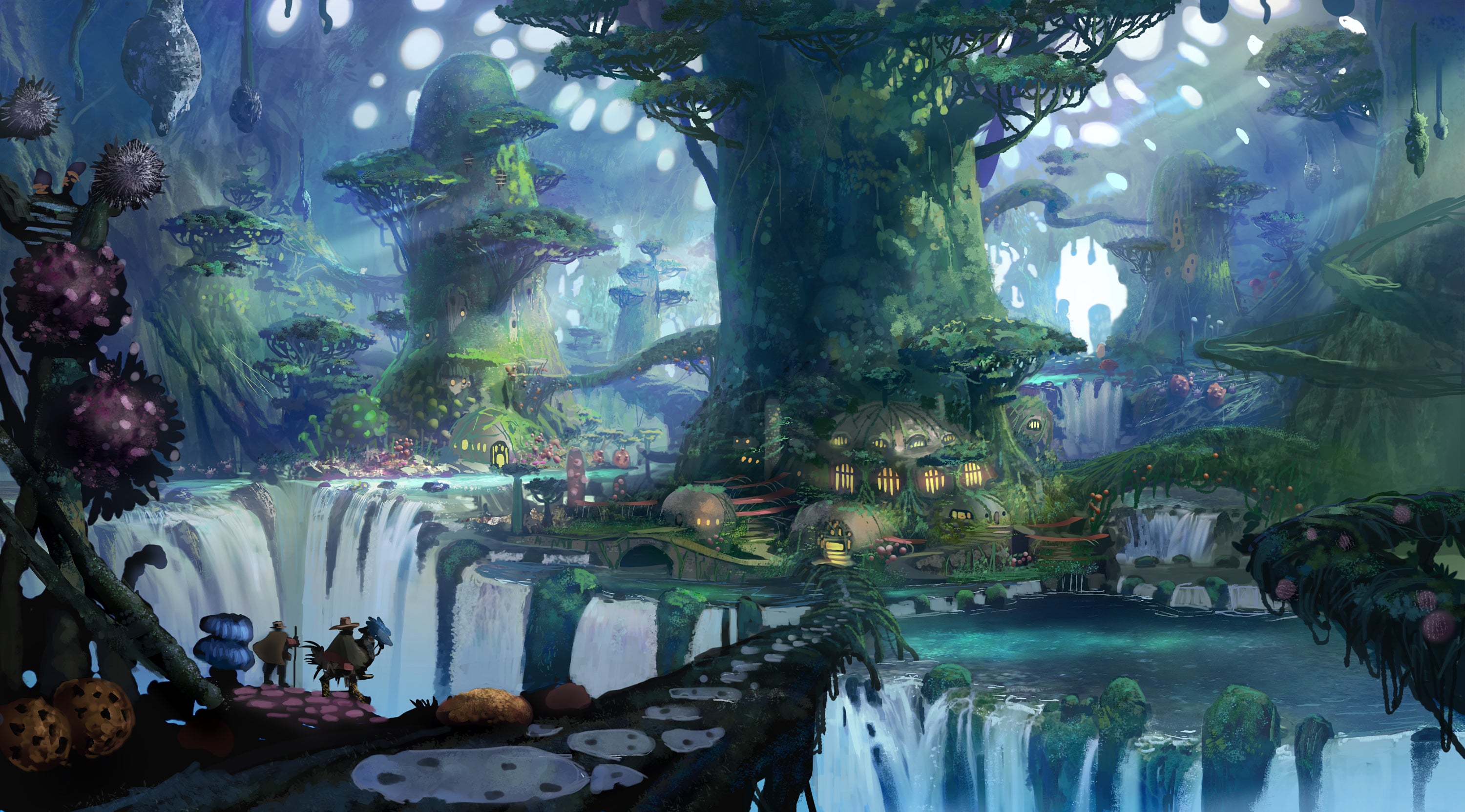
uhh, how do these wheels turn exactly?
Very messy bruteforce.
I’ve had some problems with parsing in part 2 - I didn’t account for double digit numbers before dna sequences and that caused my code to work on example, but silently fail only on the real input. I’ve figured it out after ~30 minutes with some external help.
Part 3 runs in 700ms - not great, but not too bad either.
proc similarity(a, b: string): int =
  for i, c in a:
    if c == b[i]: inc result

proc solve_part1*(input: string): Solution =
  var sim: seq[int]

  var dnaList: seq[string]
  for line in input.splitLines():
    dnaList.add line[2..^1]

  for i in 0 .. dnaList.high:
    for j in i+1 .. dnaList.high:
      let s = similarity(dnaList[i], dnaList[j])
      sim.add s

  sim.sort()
  result := sim[^2] * sim[^1]

proc parentTest(ch, p1, p2: string): bool =
  for i, c in ch:
    if (c != p1[i]) and (c != p2[i]): return false
  true

proc simTable(dnaList: seq[string]): seq[seq[int]] =
  result = newSeqWith(dnaList.len, newseq[int](dnaList.len))
  for i in 0 .. dnaList.high:
    for j in i+1 .. dnaList.high:
      let s = similarity(dnaList[i], dnaList[j])
      result[i][j] = s
      result[j][i] = s

proc solve_part2*(input: string): Solution =
  var dnaList: seq[string]
  for line in input.splitLines():
    dnaList.add line.split(':')[1]

  let sim = simTable(dnaList)
  var indices = toseq(0..dnaList.high)
  for i, childDna in dnaList:
    var indices = indices
    indices.del i

    block doTest:
      for k in 0 .. indices.high:
        for j in k+1 .. indices.high:
          let p1 = indices[k]
          let p2 = indices[j]
          if parentTest(childDna, dnaList[p1], dnaList[p2]):
            result.intVal += sim[i][p1] * sim[i][p2]
            break doTest

proc solve_part3*(input: string): Solution =
  var dnaList: seq[string]
  for line in input.splitLines():
    dnaList.add line.split(':')[1]

  var families: seq[set[int16]]
  var indices = toseq(0..dnaList.high)
  for ch, childDna in dnaList:
    var indices = indices
    indices.del ch

    block doTest:
      for k in 0 .. indices.high:
        for j in k+1 .. indices.high:
          let p1 = indices[k]
          let p2 = indices[j]
          if parentTest(childDna, dnaList[p1], dnaList[p2]):
            families.add {ch.int16, p1.int16, p2.int16}
            break doTest

  var combined: seq[set[int16]]
  while families.len > 0:
    combined.add families.pop()
    var i = 0
    while i <= families.high:
      if (combined[^1] * families[i]).len > 0:
        combined[^1] = combined[^1] + families[i]
        families.del i
        i = 0
      else: inc i

  let maxInd = combined.mapIt(it.len).maxIndex
  result := combined[maxInd].toseq.mapIt(it.int+1).sum()
Full solution at Codeberg: solution.nim
Part 2 - I just really didn’t want to think that day. So when puzzle asked me to check if lines intersect - I wrote the intersection checking solution with 2D points.
Part 3 is geometry + bruteforce.
proc solve_part1*(input: string): Solution =
  let pins = input.split(',').mapIt(parseInt(it))
  for i in 0 ..< pins.high:
    let d = abs(pins[i] - pins[i+1])
    if d == 16: inc result.intVal

proc ccw(A,B,C: Vec2): bool = (C.y-A.y) * (B.x-A.x) > (B.y-A.y) * (C.x-A.x)
proc isIntersection(A,B,C,D: Vec2): bool = ccw(A,C,D) != ccw(B,C,D) and ccw(A,B,C) != ccw(A,B,D)

proc solve_part2*(input: string): Solution =
  const two_pi = PI * 2
  const pin_count = 256

  var pins: array[pin_count, Vec2]
  for i in 0 ..< pin_count:
    let angle = two_pi * (i / pin_count)
    let point: Vec2 = (cos(angle), sin(angle))
    pins[i] = point

  let inst = input.split(',').mapIt(parseInt(it))
  var lines: seq[(Vec2, Vec2)]

  for i in 0 ..< inst.high:
    let A = pins[inst[i]-1]
    let B = pins[inst[i+1]-1]

    for (C, D) in lines:
      if isIntersection(A,B,C,D):
        inc result.intVal
    lines.add shortenSegment(A, B, 0.0001)

proc solve_part3*(input: string): Solution =
  const two_pi = PI * 2
  const pin_count = 256

  var pins: array[pin_count, Vec2]
  for i in 0 ..< pin_count:
    let angle = two_pi * (i / pin_count)
    let point: Vec2 = (cos(angle), sin(angle))
    pins[i] = point

  let inst = input.split(',').mapIt(parseInt(it))
  var lines: seq[(Vec2, Vec2)]

  for i in 0 ..< inst.high:
    let A = pins[inst[i]-1]
    let B = pins[inst[i+1]-1]
    lines.add shortenSegment(A, B, 0.0001)

  var bestSum = 0
  for i in 0 ..< pin_count:
    for j in i+1 ..< pin_count:
      let A = pins[i]
      let B = pins[j]
      var sum = 0
      for (C, D) in lines:
        if isIntersection(A,B,C,D): inc sum
      if sum > bestSum: bestSum = sum
  result := bestSum
Full solution at Codeberg: solution.nim










No? Most of his stuff are terrible movies.
But, I am watching them for fucking around with cool ideas and crazy visual scenes. Couldn’t care less about plot, characters, sometimes logic, etc.