

This is what I’m visualizing:
A liquid ocean pressed against the inner side of Europa’s ice crust, during high tide. Then the tide shifts and the water rushes away, leaving a gigantic hollow shell high above the ocean’s surface, like a vast dome stretching towards the horizon in all directions, in total darkness.
Meanwhile, the tidal bulge has rushed halfway across the hemisphere, the water is now pressing against the ice crust there.
If the Jovian system’s tidal forces can stretch and knead Io’s mantle like silly putty, its’ rocky surface rising and falling as much as 100 meters (about 300 feet) each tidal cycle… I can’t even imagine how violently the water may slosh under Europa’s ice crust.
One final note: considering that Europa is tidally locked with Jupiter, and it is Ganymede and Callisto that can pull in other directions, how long are the tidal cycles there? The principle is like on Earth, but there are extra gears in the mechanism, so to speak, different high and low tides may vary widely between each other.
Why would you assume the ice isn’t being squished/stretched as well?
Exactly. The crust would likely experience similar effects as the liquid beneath, probably fracturing into plates and moving on the tide. There is visual evidence of the surface expanding, contracting, and fracturing with tidal forces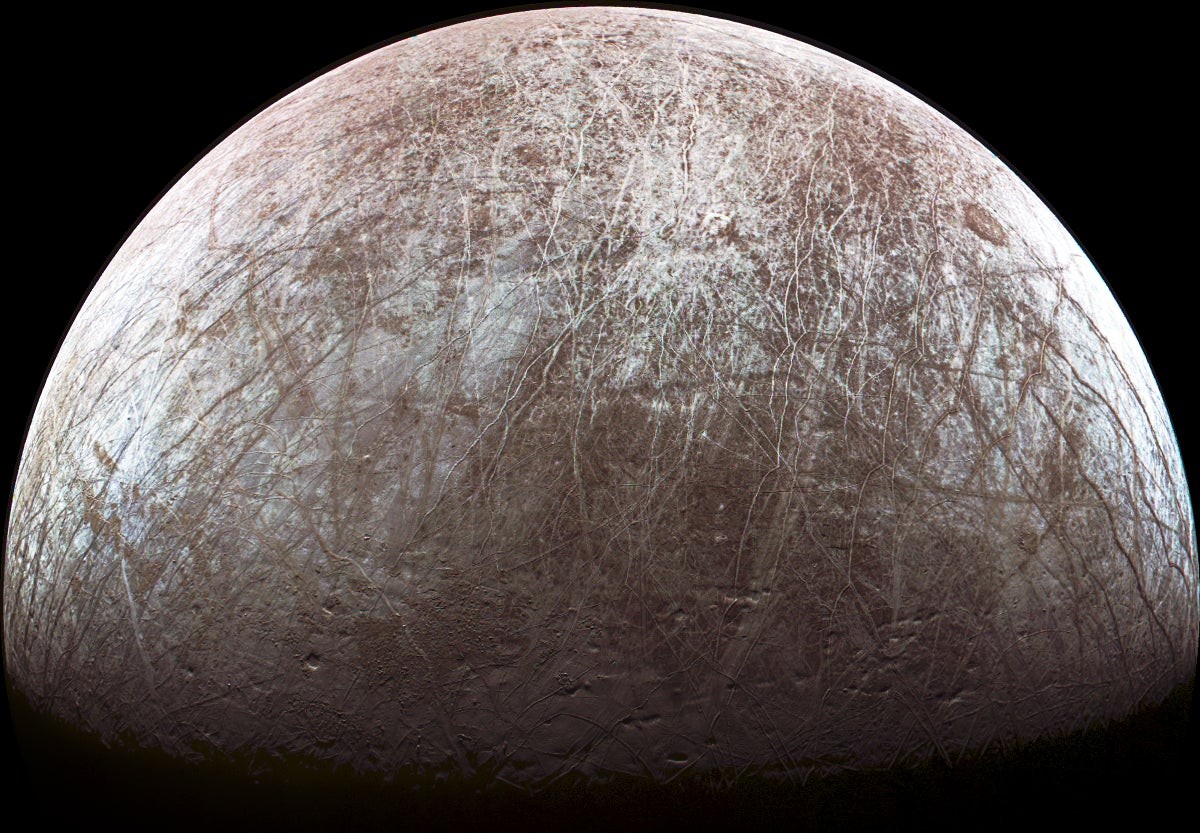
It’s a completely different scenario than on Earth. Also Europa has less gravity than our moon, even, and just 13% than Earth’s gravity. Much less pull from below, much more pull from above. That super thick ice shell just might stay in place like a church dome, even if the water level comes and goes.
So as far as I know, and I am no expert to be clear, the whole reason Europa even has a liquid ocean under the ice is because of tidal heating. Where the moon itself is pushed and pulled, heating it up immensely because of the friction of that action. So there would be no “air pockets” as such, because the ice itself is the thing creating the ocean. And due to ice being less dense than water the ocean would actually be exerting pressure on the ice mantle, not the other way around. I think this is one of the driving forces of the cryovolcanism found on Europa.