fossilesque@mander.xyzM to Science Memes@mander.xyzEnglish · 2 年前Soupmander.xyzimagemessage-square182linkfedilinkarrow-up1821arrow-down16
arrow-up1815arrow-down1imageSoupmander.xyzfossilesque@mander.xyzM to Science Memes@mander.xyzEnglish · 2 年前message-square182linkfedilink
minus-squareMonkderDritte@feddit.delinkfedilinkEnglisharrow-up62·2 年前 Humans are particularly difficult to preserve because of the delicate structure in (most of) our heads. Nonsense. We are just too big to be frozen quickly enough that no ice crystals emerge. Every living thing turns to slush if frozen normally.
minus-squarekhaliso@lemmy.worldlinkfedilinkEnglisharrow-up34·2 年前Yea. Turns out the biggest creature you can freeze and thaw again (in strict lab conditions) is a hamster, anything bigger just dies.
minus-squarestom@lemmy.dbzer0.comlinkfedilinkEnglisharrow-up9·2 年前And that’s how we got microwave ovens. (For real, see the Tom Scott video)
minus-squareMintyAnt@lemmy.worldlinkfedilinkEnglisharrow-up1·2 年前Wonder what the icon caption he uses for this one is? “SCIENCE played GOD here (and thank your stomachs they did)”


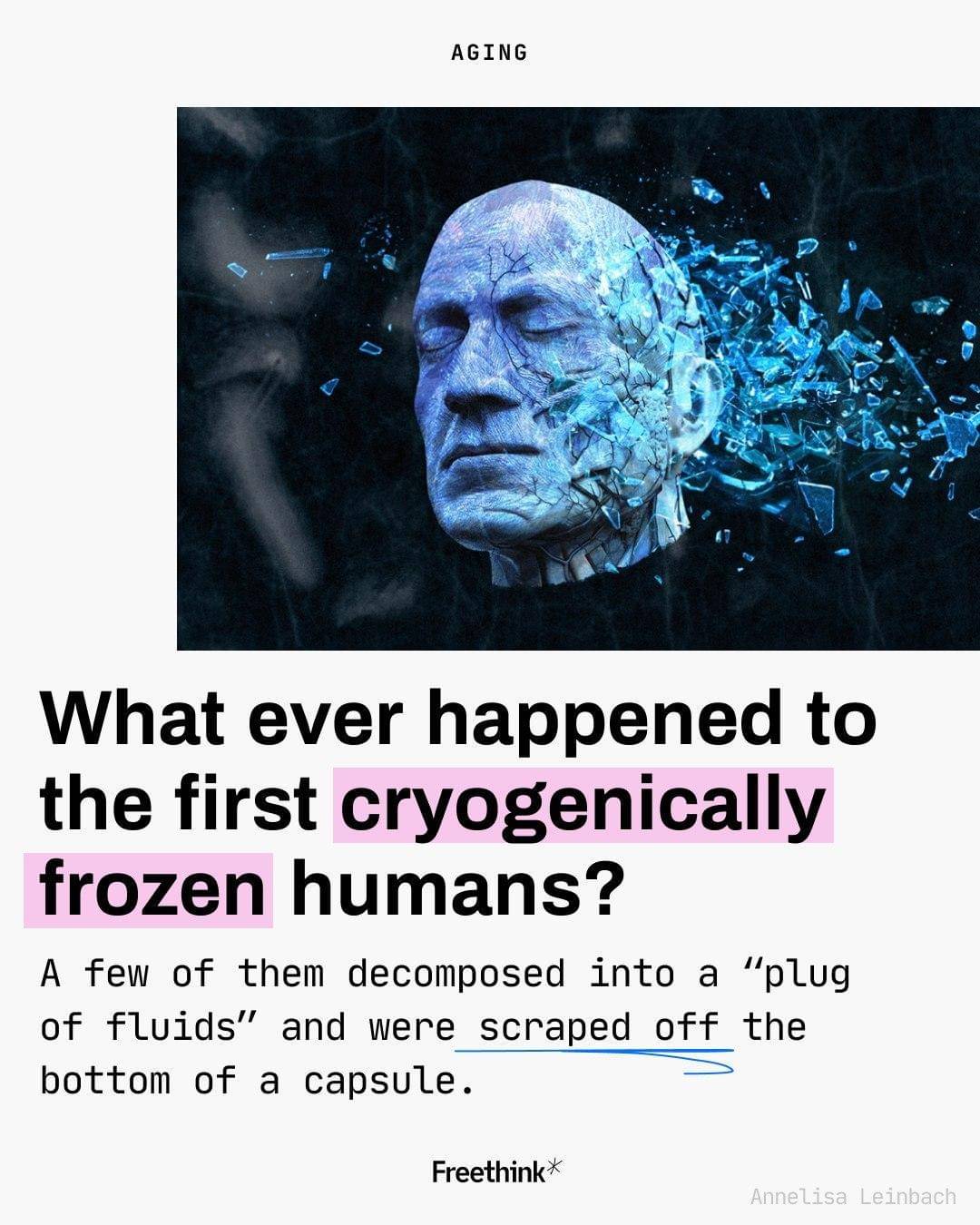
Nonsense. We are just too big to be frozen quickly enough that no ice crystals emerge. Every living thing turns to slush if frozen normally.
Yea. Turns out the biggest creature you can freeze and thaw again (in strict lab conditions) is a hamster, anything bigger just dies.
And that’s how we got microwave ovens. (For real, see the Tom Scott video)
Wonder what the icon caption he uses for this one is?
“SCIENCE played GOD here (and thank your stomachs they did)”